
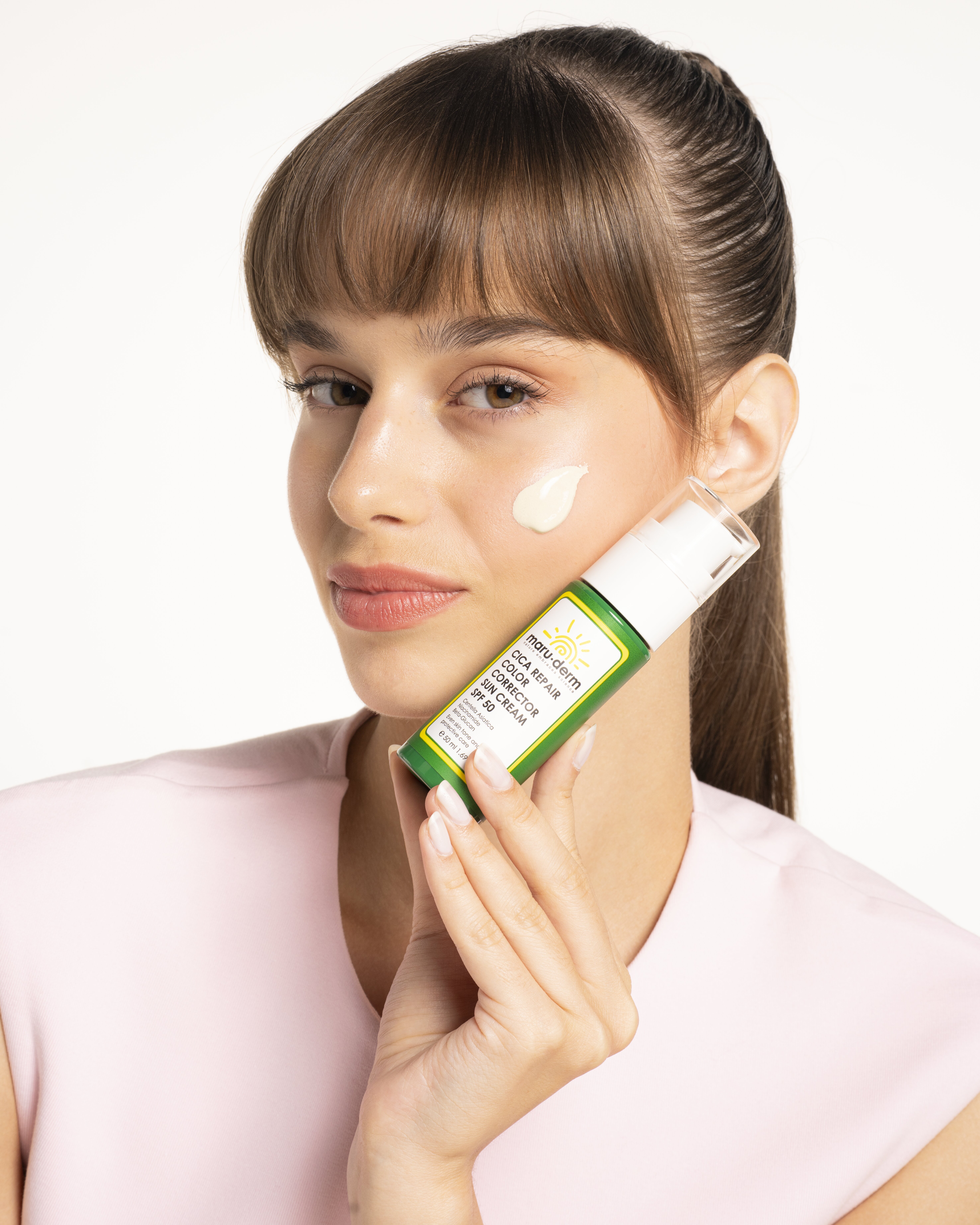
Understanding UV Damage: What Happens to Your Skin
Most people underestimate how much damage sunlight causes to the skin. UV radiation affects the skin at a cellular level, even when there are no visible signs.
There are two main types of ultraviolet rays that impact the skin:
UVA rays penetrate deeper into the skin and are responsible for aging and long-term damage
UVB rays affect the surface and cause sunburn
Both types contribute to skin damage, and both are present even on cloudy days.
How UV Rays Damage the Skin
When the skin is exposed to UV radiation:
Collagen breaks down
Melanin production increases
Inflammation is triggered
Skin barrier weakens
Over time, this leads to:
Wrinkles
Dark spots
Uneven skin tone
Loss of elasticity
UV exposure is also the primary cause of premature aging.
Why Sunscreen Is Non-Negotiable
Sunscreen is not just a protective product—it is a preventive treatment.
Without sunscreen:
Anti-aging products become less effective
Dark spots continue to develop
Skin remains in a constant state of stress
Even the best skincare routine cannot work properly without sun protection.
Using Maruderm SPF 50+ Vitamin C Sunscreen helps protect the skin from UV damage while supporting a brighter and more even complexion.
The Link Between Sun Exposure and Hyperpigmentation
Sun exposure is the main trigger for hyperpigmentation.
When skin is exposed to UV rays :
Melanocytes produce more pigment
Existing dark spots become darker
New spots appear
This is why treating pigmentation without sunscreen leads to minimal results.
Sunscreen and Acne: The Overlooked Connection
Many people avoid sunscreen because they think it causes breakouts.
In reality:
Sun exposure increases inflammation
Inflammation worsens acne
UV damage slows healing
Using the right sunscreen helps reduce post-acne marks and supports skin recovery.
Why Sunscreen Is Essential Even When Indoors
UV rays can penetrate through:
Windows
Glass surfaces
Artificial lighting (to a certain extent)
This means your skin is still exposed even when you are not outside.
Daily sunscreen use is necessary regardless of location.
SPF Explained: What Does It Actually Mean?
SPF stands for Sun Protection Factor. It measures how well a sunscreen protects against UVB rays.
For example:
SPF 30 blocks approximately 97% of UVB rays
SPF 50 blocks approximately 98% of UVB rays
While the difference seems small, it becomes significant over long periods of exposure.
SPF 30 vs SPF 50: What’s the Real Difference?
SPF 30
Blocks about 97% of UVB rays
Suitable for short daily exposure
SPF 50
Blocks about 98% of UVB rays
Provides higher protection for prolonged exposure
The difference may appear minimal, but for sensitive or pigmentation-prone skin, higher SPF provides better long-term protection.
Using Maruderm SPF 50+ Vitamin C Sunscreen ensures maximum protection against UV damage.
Why Higher SPF Matters for Long-Term Skin Health
Even a 1% difference in protection becomes significant over time.
Repeated exposure to UV rays:
Accumulates damage
Increases pigmentation
Accelerates aging
Higher SPF reduces cumulative damage and protects skin more effectively.
Common Misconceptions About Sunscreen
“I don’t need sunscreen on cloudy days”
“I only need sunscreen at the beach”
“My makeup SPF is enough”
“Darker skin doesn’t need sunscreen”
All of these are incorrect. UV exposure happens daily and affects all skin types.
How Sunscreen Fits Into Your Routine
A proper routine includes:
Cleansing
Treatment
Moisturizing
Sun protection
Sunscreen should always be the final step in the morning routine.
The Role of Hydration in Sun Protection
Hydrated skin is more resilient against environmental stress.
Using Maruderm Hyaluronic Acid Moisturizing Cream before sunscreen helps maintain moisture balance and improves skin comfort.
FAQ
1. Why is sunscreen important every day?
Because UV exposure happens daily.
2. Does sunscreen prevent aging?
Yes, it slows down collagen breakdown.
3. Is SPF 50 better than SPF 30?
Yes, especially for long exposure.
4. Can sunscreen prevent dark spots?
Yes, it reduces melanin activation.
5. Do I need sunscreen indoors?
Yes, UV rays can penetrate windows.
6. Does sunscreen clog pores?
Not if you use the right formula.
7. Can I skip sunscreen in winter?
No, UV rays are present year-round.
8. Is sunscreen necessary for oily skin?
Yes, all skin types need protection.
9. How often should I apply sunscreen?
Every 2–3 hours if exposed to sun.
10. Can sunscreen replace moisturizer?
No, both are needed.
How Much Sunscreen Should You Apply? (The Most Common Mistake)
One of the biggest reasons sunscreen fails is not the formula—it’s the amount used.
Most people apply far less than required, which significantly reduces protection. SPF levels are tested under laboratory conditions using a specific amount of product. When less is applied, the actual protection drops dramatically.
The Correct Amount of Sunscreen
For the face and neck:
Approximately two finger lengths of sunscreen
Roughly 1/3 to 1/2 teaspoon
For the entire body:
About 30 ml (a full shot glass)
Applying less than this reduces SPF effectiveness.
What Happens If You Underapply Sunscreen
If you use too little:
SPF 50 can behave like SPF 20 or lower
UV protection becomes inconsistent
Skin damage accumulates over time
This is one of the main reasons people still experience:
Dark spots
Premature aging
Uneven skin tone
When Should You Apply Sunscreen?
Sunscreen should be applied:
As the last step of your morning routine
15–20 minutes before sun exposure
This allows the product to properly form a protective layer on the skin.
How Often Should You Reapply?
Reapplication is essential.
Every 2–3 hours when outdoors
After sweating or washing the face
Even the best sunscreen cannot maintain full protection all day without reapplication.
Chemical vs Mineral Sunscreen: Which Is Better?
Understanding sunscreen types helps you choose the right product for your skin.
Chemical Sunscreen
Chemical sunscreens work by absorbing UV rays and converting them into heat.
Advantages:
Lightweight texture
No white cast
Easy to layer under makeup
Considerations:
May not suit very sensitive skin
Requires proper application time
Mineral Sunscreen
Mineral (physical) sunscreens use ingredients like zinc oxide or titanium dioxide to reflect UV rays.
Advantages:
Suitable for sensitive skin
Works immediately after application
Lower irritation risk
Considerations:
Can leave a white cast
Thicker texture
Which One Should You Choose?
There is no universal “better” option.
Choose chemical sunscreen for daily wear and comfort
Choose mineral sunscreen for sensitive or reactive skin
The most important factor is consistency, not type.
Using a high-protection formula like Maruderm SPF 50+ Vitamin C Sunscreen ensures effective daily protection regardless of skin type.
Do You Need Sunscreen Indoors?
This is one of the most debated questions in skincare.
The answer is yes.
Why Indoor Protection Matters
UV rays can penetrate:
Windows
Glass surfaces
Office environments
This means your skin is still exposed even when you are inside.
Situations Where Indoor Sunscreen Is Essential
Sitting near windows
Driving
Working in bright environments
Using screens for long periods
Even indirect exposure contributes to:
Pigmentation
Skin aging
Collagen breakdown
Blue Light and Skin Damage
Digital devices emit blue light, which can:
Contribute to oxidative stress
Affect skin tone over time
While the impact is lower than UV, it still supports the need for daily protection.
Why Your Sunscreen Isn’t Working (Common Mistakes)
Many people use sunscreen but still experience skin damage. This usually comes down to incorrect usage.
1. Applying Too Little
As mentioned earlier, underapplication reduces SPF effectiveness significantly.
2. Not Reapplying
Sunscreen wears off due to:
Sweat
Touching the face
Natural skin oils
Without reapplication, protection fades.
3. Skipping Daily Use
Using sunscreen only on sunny days is a major mistake. UV rays are present year-round.
4. Relying on Makeup SPF
Makeup with SPF does not provide enough coverage to replace sunscreen.
5. Applying Sunscreen Incorrectly
Missing areas like:
Neck
Ears
Around the eyes
These areas are often the first to show signs of aging.
6. Using Expired Sunscreen
Expired products lose effectiveness and do not provide reliable protection.
7. Not Layering Properly
Sunscreen should always be applied as the final step after moisturizer.
Using Maruderm Hyaluronic Acid Moisturizing Cream before sunscreen helps create a smooth base and improves application.
How to Build a Perfect Sunscreen Routine
Step 1: Cleanse
Start with a gentle cleanser to remove oil and impurities.
Step 2: Moisturize
Use Maruderm Hyaluronic Acid Moisturizing Cream
to maintain hydration and support the skin barrier.
Step 3: Apply Sunscreen
Apply Maruderm SPF 50+ Vitamin C Sunscreen
as the final step in your morning routine.
Step 4: Reapply
Reapply throughout the day for continuous protection.
Why Sunscreen Is the Foundation of All Skincare
Without sunscreen:
Anti-aging products lose effectiveness
Pigmentation treatments fail
Skin remains exposed to damage
Sunscreen is not optional—it is essential.
FAQ
1. How much sunscreen should I use on my face?
Two finger lengths.
2. Can I apply sunscreen once a day?
No, reapplication is necessary.
3. Is mineral sunscreen better for sensitive skin?
Yes, it is generally more suitable.
4. Do I need sunscreen indoors?
Yes, especially near windows.
5. Can makeup replace sunscreen?
No, it does not provide enough protection.
6. How long does sunscreen last?
About 2–3 hours without reapplication.
7. Does sunscreen expire?
Yes, expired sunscreen is less effective.
8. Can sunscreen prevent wrinkles?
Yes, it slows down aging.
9. Should I use sunscreen in winter?
Yes, UV rays are present year-round.
10. What is the biggest sunscreen mistake?
Not applying enough product.
Why Sunscreen Is the Foundation of Healthy Skin
Sunscreen is often treated as just another step in a skincare routine, but in reality, it is the foundation that determines whether any other product will work effectively.
Without proper sun protection:
Collagen continues to break down
Pigmentation continues to form
Inflammation remains active
Skin aging accelerates
Even the most advanced serums and treatments cannot compensate for ongoing UV damage.
Sunscreen is not just preventive—it is essential for maintaining all other skincare results.
How UV Exposure Affects Skin Over Time
UV damage is cumulative. This means that small amounts of daily exposure add up over time.
Short-term effects:
Redness
Mild irritation
Dehydration
Long-term effects:
Wrinkles
Loss of elasticity
Persistent dark spots
Uneven skin tone
The damage is often invisible at first, but it becomes more noticeable over time.
Consistent use of Maruderm SPF 50+ Vitamin C Sunscreen helps reduce this cumulative damage and supports long-term skin health.
The Connection Between Sunscreen and Anti-Aging
One of the most important roles of sunscreen is protecting collagen.
Collagen is responsible for:
Skin firmness
Smooth texture
Elasticity
UV exposure breaks down collagen fibers, leading to:
Fine lines
Wrinkles
Sagging
Using sunscreen daily slows down this process and helps maintain youthful-looking skin.
Sunscreen and Skin Barrier Protection
The skin barrier protects against external stressors and maintains hydration.
UV exposure weakens this barrier by:
Increasing water loss
Causing inflammation
Reducing skin resilience
Supporting the barrier with hydration is essential.
Using Maruderm Hyaluronic Acid Moisturizing Cream before sunscreen helps maintain moisture levels and improves skin comfort.
Why Sunscreen Is Essential for All Skin Types
There is a common misconception that sunscreen is only necessary for certain skin types.
In reality:
Oily skin needs protection from inflammation
Dry skin needs protection from barrier damage
Sensitive skin needs protection from irritation
Acne-prone skin needs protection from post-acne marks
Sunscreen benefits every skin type equally.
Sunscreen and Hyperpigmentation Prevention
Hyperpigmentation cannot be effectively treated without sun protection.
UV exposure:
Activates melanocytes
Increases melanin production
Darkens existing spots
Even minimal exposure can reverse progress made with brightening treatments.
Daily use of Maruderm SPF 50+ Vitamin C Sunscreen helps maintain even skin tone and prevent new discoloration.
Why Consistency Is More Important Than Strength
Using a high SPF product occasionally is less effective than using sunscreen consistently every day.
Consistency ensures:
Continuous protection
Reduced cumulative damage
Better long-term results
Skipping sunscreen even occasionally can slow down progress significantly.
How to Make Sunscreen a Habit
Building consistency requires simplicity.
Keep sunscreen in visible places
Apply it at the same time every morning
Reapply when needed
Making sunscreen part of your daily routine ensures long-term benefits.
Common Reasons People Avoid Sunscreen
Some users avoid sunscreen due to:
Heavy texture
Fear of breakouts
White cast
Forgetting to apply
Choosing the right formulation and building a habit helps overcome these barriers.
How Sunscreen Improves Overall Skin Appearance
With consistent use:
Skin tone becomes more even
Dark spots fade faster
Redness decreases
Texture improves
Skin looks healthier
These improvements are not immediate but become visible over time.
The Long-Term Benefits of Daily Sunscreen Use
Reduced signs of aging
Lower risk of hyperpigmentation
Improved skin barrier function
Healthier and more resilient skin
These benefits make sunscreen the most important product in any skincare routine.
Complete Daily Sunscreen Routine
Step 1: Cleanse
Step 2: Apply moisturizer such as Maruderm Hyaluronic Acid Moisturizing Cream
Step 3: Apply Maruderm SPF 50+ Vitamin C Sunscreen
Step 4: Reapply throughout the day
Final Perspective: The Most Important Step You Can Take
If there is one product that has the greatest impact on skin health, it is sunscreen.
It protects against:
Aging
Pigmentation
Environmental damage
It also supports:
Skin repair
Treatment effectiveness
Long-term skin quality
No skincare routine is complete without it.
FAQ
1. Is sunscreen really necessary every day?
Yes, daily use is essential.
2. Can sunscreen prevent wrinkles?
Yes, it protects collagen from UV damage.
3. Does sunscreen help with dark spots?
Yes, it prevents new pigmentation and protects existing skin.
4. Can I skip sunscreen if I stay indoors?
No, UV rays can still reach your skin.
5. Does sunscreen improve skin over time?
Yes, it supports healthier skin.
6. Can sunscreen replace other skincare products?
No, but it enhances their effectiveness.
7. Is SPF 50 enough protection?
Yes, when applied correctly.
8. What happens if I don’t use sunscreen?
Skin damage accumulates over time.
9. Can sunscreen cause acne?
Proper formulations do not clog pores.
10. What is the most important skincare habit?
Daily sunscreen use.