
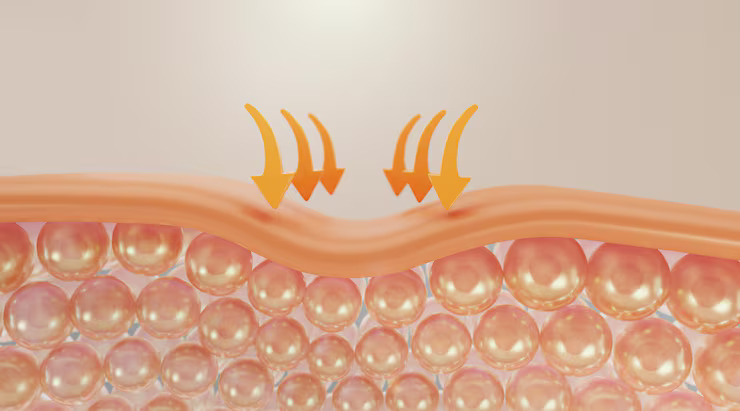
What Is Skin Elasticity?
Skin elasticity is the skin’s ability to stretch, move, and return to its original shape. It is what gives skin a firm, bouncy, lifted, and resilient appearance.
When skin has good elasticity, it looks:
Firm
Smooth
Plump
Flexible
Fresh
Well-supported
Less tired
When elasticity decreases, the skin may begin to look looser, thinner, less firm, or less able to “bounce back.” Fine lines may become more visible, facial contours may look softer, and the skin may appear less tight than before.
Elasticity is not controlled by one single factor. It depends on several biological systems working together, especially collagen, elastin, hydration, and the skin barrier.
Cleveland Clinic explains that the dermis contains collagen and elastin, which give the skin elasticity and tightness; UVA exposure can penetrate deeply and is linked to long-term skin damage such as wrinkles.
This is why improving skin elasticity is not only about using one firming cream. It requires a complete strategy that protects the skin, hydrates it, supports structural proteins, and prevents further damage.
Why Skin Elasticity Decreases Over Time
Loss of elasticity is a natural part of aging, but it can happen faster when the skin is exposed to daily stress without enough protection.
The most common causes include:
Natural aging
Collagen decline
Elastin damage
UV exposure
Dehydration
Oxidative stress
Pollution
Smoking
Poor sleep
Weak skin barrier
Inconsistent sunscreen use
As the skin ages, collagen production slows down and existing collagen becomes weaker. Elastin fibers also lose quality, which affects the skin’s ability to snap back. When hydration decreases, fine lines and looseness can look more visible.
This is why skin elasticity routines should focus on both prevention and support.
You cannot stop natural aging completely, but you can slow visible signs of elasticity loss by protecting the skin daily and giving it the right ingredients consistently.
Collagen and Elastin: The Foundation of Firm Skin
Collagen and elastin are two of the most important structural proteins in the skin.
Collagen gives skin firmness, density, and support.
Elastin gives skin flexibility and bounce.
You can think of collagen as the structure that holds the skin firm, while elastin is what allows the skin to stretch and return to position.
When collagen and elastin are healthy, the skin looks smoother and more lifted. When they weaken, the skin may begin to sag, crease, or look less resilient.
UV exposure is one of the biggest external causes of collagen and elastin damage. Cleveland Clinic notes that UV light damages collagen, and recommends daily sunscreen with SPF 30 or higher as part of slowing visible skin aging.
This is why sunscreen is one of the most important products for maintaining skin elasticity. A firming routine without sunscreen is incomplete.
The Role of Hydration in Skin Elasticity
Hydration does not replace collagen or elastin, but it strongly affects how elastic the skin looks.
When skin is dehydrated, it can appear:
Tired
Dull
Creased
Less plump
Less smooth
More textured
Less flexible
Fine lines can look deeper when the skin lacks water. The face may look less fresh even if the skin is not truly aging faster.
Hydrated skin looks more supple because water supports the outer layers of the skin and helps maintain a smoother surface.
This is why hyaluronic acid is often used in elasticity-focused routines. It helps attract and hold moisture, which can improve the look of plumpness and comfort.
Maruderm Hyaluronic Acid & Collagen AntiAging Serum is designed to support intense hydration and a plumper-looking skin appearance. Its official product description notes that it is enriched with niacinamide and peptides to support a smoother and more vibrant complexion, especially for skin experiencing moisture loss or fine lines.
For skin elasticity, hydration is not optional. It is one of the easiest ways to make skin look smoother and more resilient.
The Role of the Skin Barrier in Elasticity
The skin barrier protects the skin from external stress and helps prevent moisture loss. When the barrier is healthy, the skin holds hydration better and feels calmer.
When the barrier is weak, the skin may become:
Dry
Tight
Red
Reactive
Rough
Dehydrated
More sensitive
Less smooth-looking
A weak barrier does not directly destroy collagen overnight, but it creates an environment where the skin looks less healthy and ages less gracefully. Irritated skin can look tired, uneven, and less firm.
This is why improving elasticity should not involve harsh routines. Over-exfoliating, overusing retinol, or layering too many active ingredients can damage the barrier and make the skin look worse.
A good elasticity routine should support the skin barrier while targeting firmness.
The goal is not to attack the skin. The goal is to strengthen it.
Why UV Exposure Is the Biggest External Threat to Elasticity
Sun exposure is one of the fastest ways to reduce visible skin firmness over time.
UV radiation contributes to photoaging, which includes wrinkles, pigmentation, roughness, and loss of elasticity. A review on UV-related photoaging notes that repeated UV exposure increases collagen degradation and alters elastin fibers, contributing to visible aging changes.
This is why people who use strong anti-aging products but skip sunscreen often do not see the results they expect.
Without sunscreen, the skin continues to experience damage while the routine tries to repair or support it.
Daily sunscreen helps protect:
Collagen
Elastin
Skin tone
Skin texture
Firmness
Fine line appearance
Long-term skin quality
Maruderm SPF 50+ Vitamin C Sun Cream is a daily sunscreen formulated to provide broad-spectrum UV protection while supporting brightness and hydration. Its official product page describes it as lightweight and comfortable, helping create a smooth and even-looking finish.
For elasticity, sunscreen is the foundation. Firming serums and creams are helpful, but SPF protects the structure they are trying to support.
Signs Your Skin Is Losing Elasticity
Loss of elasticity can appear gradually. It usually does not happen overnight.
Common signs include:
Skin does not look as firm as before
Fine lines appear more visible
Skin looks thinner or less dense
Cheeks look less lifted
Jawline looks softer
Skin looks tired even after rest
Makeup settles into lines more easily
Skin feels less plump
Texture looks less smooth
Neck and under-eye area look looser
Elasticity loss often appears first in areas where the skin is thinner or more exposed to movement and sun.
These areas include:
Around the eyes
Around the mouth
Cheeks
Jawline
Neck
Décolleté
Forehead
The earlier you support elasticity, the easier it is to maintain visible firmness.
Can You Restore Skin Elasticity?
You can improve the appearance of skin elasticity, but expectations should be realistic.
Topical skincare can support:
Hydration
Smoothness
Firmness appearance
Fine line appearance
Skin barrier strength
Plumper-looking skin
More even texture
Better skin resilience
However, skincare cannot fully reverse deep structural aging, severe sagging, or significant collagen loss in the same way professional treatments may.
The best approach is prevention plus support.
This means:
Protect collagen from UV damage
Keep the skin hydrated
Use firming-support ingredients
Maintain the skin barrier
Avoid repeated irritation
Stay consistent for several months
Elasticity improves slowly because skin structure changes gradually.
Best Ingredients to Improve the Look of Skin Elasticity
The most useful skincare ingredients for elasticity are those that support hydration, collagen appearance, barrier strength, and antioxidant protection.
1. Peptides
Peptides are short chains of amino acids used in skincare to support firmness, smoothness, and skin quality.
They are especially useful in elasticity routines because they are generally gentle and suitable for long-term use.
Peptides are not instant lifting ingredients. They work gradually and perform best when used consistently.
They are helpful for:
Fine lines
Loss of firmness
Tired-looking skin
Mature skin
Sensitive anti-aging routines
Barrier-supportive routines
Maruderm Anti-Aging Cream is a nourishing moisturizer designed to support the appearance of fine lines, skin firmness, and overall texture. Its official product page notes that it is enriched with peptides, niacinamide, and hyaluronic acid to promote a smoother and more youthful-looking complexion.
Peptides are ideal for people who want anti-aging support without constantly irritating the skin.
2. Hyaluronic Acid
Hyaluronic acid supports hydration and plumpness. It helps the skin look fuller, smoother, and more flexible.
It is especially useful when skin looks:
Dehydrated
Fine-lined
Dull
Tight
Less plump
Rough under makeup
Hyaluronic acid does not rebuild elastin fibers directly, but it improves the way elasticity looks by increasing surface hydration and comfort.
When the skin is hydrated, fine lines often look softer and the skin appears more supple.
3. Niacinamide
Niacinamide supports barrier strength, even tone, oil balance, and overall skin resilience.
It is useful in elasticity routines because a healthy barrier helps the skin retain moisture and tolerate other ingredients better.
Niacinamide pairs well with peptides and hyaluronic acid, making it especially useful in firming and anti-aging products.
4. Vitamin C
Vitamin C supports radiance, antioxidant protection, and collagen-focused skincare routines.
It is especially useful in the morning because it pairs well with sunscreen.
Vitamin C does not replace SPF, but it can support a routine focused on brightness and environmental protection.
For elasticity, vitamin C is helpful because oxidative stress and UV exposure contribute to visible aging.
5. Retinoids
Retinoids are among the strongest topical ingredients for skin renewal and anti-aging. They can improve the appearance of texture, fine lines, and firmness over time.
However, retinoids can irritate the skin if introduced too quickly.
If the skin barrier is weak, retinoids should be used carefully.
For many people, a routine that combines hydration, peptides, sunscreen, and gradual retinoid use can support visible elasticity over time.
6. Sunscreen
Sunscreen is the most important elasticity-preserving step.
It does not add firmness instantly, but it helps prevent the daily UV damage that breaks down collagen and elastin.
Daily sunscreen is essential for anyone trying to maintain youthful-looking skin.
The American Academy of Dermatology notes that sunscreen can help prevent premature skin aging, including wrinkles and age spots caused by too much unprotected UV exposure.
For elasticity, skipping sunscreen is one of the biggest mistakes.
What Makes a Good Skin Elasticity Routine?
A good elasticity routine should do four things:
Protect the skin from UV damage
Support hydration
Strengthen the barrier
Use firming-support ingredients consistently
It does not need to include too many products.
A simple, effective structure is:
Morning:
Cleanser
Hydrating or peptide serum
Moisturizer if needed
Sunscreen
Evening:
Cleanser
Hydrating or peptide serum
Firming cream
This routine supports the skin without overwhelming it.
Beginner Routine to Improve Skin Elasticity
If you are just starting, keep the routine simple.
Morning Routine
Cleanser
Maruderm Hyaluronic Acid & Collagen AntiAging Serum
Maruderm SPF 50+ Vitamin C Sun Cream
Evening Routine
Cleanser
Maruderm Hyaluronic Acid & Collagen AntiAging Serum
Maruderm Anti-Aging Cream
This routine focuses on hydration, peptides, firmness support, and daily UV protection.
It is simple enough to maintain and balanced enough for long-term use.
Why You Should Not Overload an Elasticity Routine
When people want firmer skin, they often start using too many active ingredients at once. They add retinol, vitamin C, exfoliating acids, peptides, firming creams, masks, and scrubs all in the same week.
This can backfire.
Too many actives can cause:
Redness
Burning
Peeling
Dryness
Barrier damage
Sensitivity
More visible texture
Dullness
A damaged barrier makes skin look less elastic, not more elastic.
A good routine should be consistent, not aggressive.
Skin that feels calm and hydrated usually looks firmer than skin that is irritated and stripped.
How Long Does It Take to Improve Skin Elasticity?
Skin elasticity improves gradually.
A realistic timeline looks like this:
Week 1–2: Skin may feel more hydrated and comfortable
Week 3–4: Fine lines may look softer due to better hydration
Week 6–8: Texture may appear smoother
Week 8–12: Skin may look firmer and more resilient
3–6 months: Long-term elasticity support becomes more visible
Results depend on age, sun exposure, consistency, lifestyle, and the severity of elasticity loss.
Do not judge an elasticity routine after only one week.
The skin needs time.
Lifestyle Factors That Affect Skin Elasticity
Skincare helps, but elasticity is also affected by lifestyle.
Important factors include:
Sleep quality
Hydration
Balanced nutrition
Protein intake
Antioxidant intake
Avoiding smoking
Managing stress
Daily sunscreen use
Avoiding tanning
Consistent skincare
Cleveland Clinic notes that UV exposure damages collagen and recommends sunscreen, protective clothing, and avoiding tanning beds to slow visible skin aging.
Elasticity is not only a skincare issue. It is a skin-health issue.
Common Mistakes That Reduce Skin Elasticity
1. Skipping Sunscreen
This is the biggest mistake. UV exposure damages collagen and elastin over time.
2. Ignoring Hydration
Dehydrated skin looks less plump and less flexible.
3. Overusing Strong Actives
Too much exfoliation or retinol can damage the barrier and make the skin look worse.
4. Expecting Instant Firming
Elasticity improves gradually. There is no overnight topical solution for true firmness loss.
5. Using Products Inconsistently
Firming routines need repeated use for weeks or months.
FAQ
1. What is skin elasticity?
Skin elasticity is the skin’s ability to stretch and return to its original shape.
2. What causes loss of skin elasticity?
Aging, UV exposure, collagen decline, elastin damage, dehydration, oxidative stress, and barrier weakness can all reduce skin elasticity.
3. Can skin elasticity be improved?
The appearance of skin elasticity can improve with hydration, sunscreen, peptides, barrier support, and consistent skincare.
4. What is the best ingredient for skin elasticity?
Peptides, hyaluronic acid, niacinamide, vitamin C, retinoids, and sunscreen all support elasticity-focused routines.
5. Does hyaluronic acid improve elasticity?
Hyaluronic acid improves hydration and plumpness, which can make skin look more elastic and smoother.
6. Do peptides help skin elasticity?
Yes, peptides can help support smoother, firmer-looking skin over time.
7. Does sunscreen help preserve elasticity?
Yes, sunscreen helps protect collagen and elastin from UV-related damage.
8. Why is my skin losing firmness?
Loss of firmness may be caused by aging, sun exposure, dehydration, collagen decline, and weakened skin structure.
9. How long does it take to improve skin elasticity?
Visible improvements usually take several weeks to months of consistent care.
10. What is the most important step for skin elasticity?
Daily sunscreen is the most important step because it helps prevent UV-related collagen and elastin damage.
How to Build a Skincare Routine to Improve Skin Elasticity
Improving skin elasticity is not about adding every anti-aging product to your bathroom shelf. It is about building a routine that supports the skin every day without overwhelming it.
Elasticity depends on structure, hydration, protection, and consistency. If the skin is constantly irritated, dehydrated, or exposed to UV damage, it will look less firm even if you use good products. This is why the best elasticity routine is balanced rather than aggressive.
A strong skin elasticity routine should include:
Daily sun protection
Hydration support
Peptides or firming-support ingredients
Barrier-friendly moisturizer
Gentle cleansing
Consistent nighttime care
Avoidance of over-exfoliation
The goal is not to force the skin into looking firm overnight. The goal is to create the right conditions so the skin looks smoother, fuller, and more resilient over time.
Morning Routine for Skin Elasticity
The morning routine should focus on protection and hydration. During the day, the skin is exposed to UV rays, pollution, temperature changes, dryness, and environmental stress. These factors can affect collagen, elastin, skin tone, and overall skin quality.
A good morning routine protects the skin before damage accumulates.
Step 1: Gentle Cleansing
Start with a gentle cleanse. The goal is to remove overnight oil, sweat, and product residue without stripping the skin.
Harsh cleansing can make the skin feel tight and dry. Tight skin is not firm skin. It is often dehydrated skin.
Use lukewarm water and avoid aggressive rubbing. If your skin is dry or sensitive, a very mild cleanse may be enough in the morning. If your skin is oily, cleansing can help create a fresher base before serum and sunscreen.
The skin should feel clean, soft, and comfortable after cleansing.
Step 2: Apply a Hydrating and Firming-Support Serum
After cleansing, apply a serum that supports hydration and smoother-looking skin.
Hydration is one of the fastest ways to improve the appearance of elasticity. When the skin is hydrated, it looks plumper, softer, and more flexible. Fine lines often look less visible when the skin is properly moisturized.
Maruderm Hyaluronic Acid & Collagen AntiAging Serum can fit into this step because it is designed to support intense hydration, plumper-looking skin, smoother texture, and improved elasticity appearance. Its official product information notes that it contains hydrolyzed collagen, a peptide complex, sodium hyaluronate, niacinamide, panthenol, and an amino acid complex for hydration, firmness appearance, and skin comfort support.
Apply a thin layer to clean skin and let it absorb before the next step.
Do not over-apply serum. More product does not mean more firmness. A consistent amount used daily is more effective than applying too much occasionally.
Step 3: Moisturize If Your Skin Needs It
Not everyone needs a heavy moisturizer in the morning, but most skin types need some level of moisture support.
Dry skin usually needs moisturizer before sunscreen.
Oily skin may prefer a lighter routine, especially if the sunscreen already feels hydrating.
Sensitive skin often benefits from moisturizer because it helps reduce discomfort and supports the barrier.
The moisturizer step helps lock in hydration and keeps the skin comfortable throughout the day. When the skin barrier is supported, the skin looks healthier and more elastic.
If your skin feels tight after serum, use moisturizer. If your skin feels balanced and comfortable, you can move directly to sunscreen.
Step 4: Apply Sunscreen Every Morning
Sunscreen is the most important step for preserving skin elasticity.
UV exposure damages collagen and contributes to premature aging, including wrinkles, sagging, and uneven tone. Dermatology sources consistently identify sun protection as essential for reducing premature skin aging and protecting collagen from UV-related damage.
Maruderm SPF 50+ Vitamin C Sun Cream can be used as the final morning step. Its official product information describes it as a high-protection daily sunscreen that supports broad-spectrum UV protection, brightness, hydration, smoothness, and a lightweight non-greasy finish.
Apply sunscreen generously to the face and neck. If you spend prolonged time outdoors, reapply during the day.
A firming routine without sunscreen is incomplete. Peptides, hyaluronic acid, retinoids, and antioxidants all work better when the skin is protected from daily UV damage.
Evening Routine for Skin Elasticity
The evening routine should focus on recovery, hydration, and skin support. At night, the skin is not dealing with direct UV exposure, so this is a good time to use nourishing and firming-support products.
Your nighttime routine does not need to be complicated. It should help the skin recover from the day and prepare for the next morning.
Step 1: Cleanse Properly
Evening cleansing is important because sunscreen, makeup, oil, sweat, and pollution can collect on the skin throughout the day.
If residue remains on the skin overnight, the skin may look dull, congested, or uneven.
Cleanse gently but thoroughly. If you wear makeup or heavy sunscreen, double cleansing may be useful. The goal is to remove buildup without leaving the skin stripped.
After cleansing, the skin should feel fresh and comfortable.
Step 2: Apply a Hydrating Serum
A hydrating serum can be used again in the evening to support moisture and skin comfort.
For elasticity-focused routines, this step helps maintain a plumper-looking surface while supporting smoother texture.
Maruderm Hyaluronic Acid & Collagen AntiAging Serum can be used morning and evening if your skin tolerates it well. This is especially useful for dry, mature, dehydrated, or tired-looking skin.
Hydrated skin looks more elastic because it reflects light better, feels softer, and shows fine lines less sharply.
Step 3: Use a Firming-Support Cream
A firming-support cream helps seal hydration and nourish the skin overnight.
Maruderm Anti-Aging Cream can be used as the evening moisturizer step in an elasticity-focused routine. Its official product page describes it as a nourishing moisturizer designed to improve the appearance of fine lines, support firmness and elasticity appearance, improve texture, and provide hydration and long-lasting comfort. It is enriched with a peptide complex, niacinamide, sodium hyaluronate, glycerin, panthenol, allantoin, shea butter, and vitamin E.
This type of cream is especially useful for skin that feels dry, tired, less firm, or less smooth.
Apply it as the final step of your evening routine. Massage gently without pulling the skin.
The Best Routine Structure for Improving Elasticity
A simple routine is often the most effective.
Morning
Cleanser
Maruderm Hyaluronic Acid & Collagen AntiAging Serum
Moisturizer if needed
Maruderm SPF 50+ Vitamin C Sun Cream
Evening
Cleanser
Maruderm Hyaluronic Acid & Collagen AntiAging Serum
Maruderm Anti-Aging Cream
This routine supports hydration, firmness appearance, texture, comfort, and daily UV protection.
It is also realistic. A routine that is easy to repeat every day is more valuable than a complicated routine you only follow sometimes.
How to Improve Skin Elasticity by Skin Type
Different skin types need different approaches. The goal is the same—firmer, smoother, more resilient-looking skin—but the routine should be adjusted based on how your skin behaves.
Dry Skin
Dry skin often shows elasticity loss more visibly because dehydration makes fine lines and texture stand out. When dry skin lacks moisture, it can look thinner, rougher, and less flexible.
Dry skin needs:
Hydrating serum
Nourishing cream
Sunscreen
Gentle cleansing
Barrier support
A good dry skin routine should avoid harsh cleansers and frequent exfoliation. Strong actives can be used, but only if the skin barrier is stable.
For dry skin, layering Maruderm Hyaluronic Acid & Collagen AntiAging Serum with Maruderm Anti-Aging Cream can help support hydration, comfort, and a smoother-looking surface.
Oily Skin
Oily skin can still lose elasticity. Many people assume oily skin does not need hydration, but this is not true.
Oily skin can be dehydrated underneath. When this happens, the skin may look shiny but still feel tight or rough.
Oily skin needs:
Lightweight hydration
Daily sunscreen
Non-heavy textures
Gentle cleansing
Barrier balance
Oily skin may prefer using a serum rather than a rich cream in the morning. A richer cream can be reserved for nighttime if needed.
The key is to support elasticity without making the skin feel congested.
Sensitive Skin
Sensitive skin needs a slower and gentler approach. If the skin reacts easily, do not build an aggressive anti-aging routine immediately.
Sensitive skin should focus on:
Barrier support
Hydration
Gentle ingredients
Sunscreen
Avoiding overuse of actives
Peptides and hyaluronic acid are often useful in sensitive skin routines because they support skin quality without the same irritation risk as strong acids or high-frequency retinol.
If your skin burns, stings, or becomes red easily, start with hydration and sunscreen before adding more active treatments.
Mature Skin
Mature skin usually needs more support because collagen, elastin, hydration, and barrier strength naturally decline over time.
Mature skin benefits from:
Peptides
Hyaluronic acid
Richer moisture
Sunscreen
Consistent night care
Gentle renewal if tolerated
The goal is not to chase harsh treatments. The goal is to support the skin every day so it looks smoother, softer, and more resilient.
A routine with Maruderm Hyaluronic Acid & Collagen AntiAging Serum, Maruderm Anti-Aging Cream, and Maruderm SPF 50+ Vitamin C Sun Cream can support mature skin with hydration, firmness appearance, and daily UV protection.
Dehydrated Skin
Dehydrated skin lacks water, not necessarily oil. It may feel tight, dull, and rough while still producing oil.
Dehydrated skin often makes elasticity loss look worse.
Signs of dehydrated skin include:
Fine lines becoming more visible
Tightness after cleansing
Dull appearance
Makeup settling into lines
Skin feeling oily but dry underneath
Rough texture
For dehydrated skin, hyaluronic acid and moisture-binding ingredients are important. Apply hydrating serum before cream or sunscreen, and avoid stripping cleansers.
Acne-Prone Skin
Acne-prone skin also needs elasticity support, especially if acne treatments have caused dryness or barrier weakness.
The challenge is choosing textures that do not feel too heavy.
Acne-prone skin needs:
Lightweight hydration
Non-greasy sunscreen
Barrier support
Controlled active ingredient use
Gentle cleansing
Avoid layering too many products. A light serum and sunscreen may be enough in the morning. If the skin feels dry from acne treatments, use a moisturizer at night.
Elasticity routines for acne-prone skin should never clog or overwhelm the skin.
Neck and Décolleté: The Forgotten Elasticity Zones
Many people apply skincare only to the face and forget the neck and décolleté. These areas are often exposed to UV rays and can show elasticity loss early.
The neck may develop:
Horizontal lines
Crepey texture
Looser skin
Dryness
Uneven tone
The décolleté may show:
Sun spots
Fine lines
Rough texture
Loss of smoothness
Apply serum, moisturizer, and sunscreen to these areas as well.
A simple rule: whatever supports elasticity on the face can usually be extended to the neck and upper chest, as long as the skin tolerates it.
Be gentle. Do not pull or tug the neck area.
The Under-Eye Area and Elasticity
The under-eye area is delicate and often shows early signs of elasticity loss.
This area may develop:
Fine lines
Creasing
Dryness
Tired appearance
Thinner-looking skin
Loss of smoothness
The under-eye area needs gentle hydration and careful application. Avoid applying strong actives too close to the eyes unless the product is designed for that area.
Use small amounts of product and tap gently. Do not rub.
Sunscreen should also be applied carefully around the eye area if tolerated, because UV exposure contributes to visible aging.
How Often Should You Use Elasticity Products?
Most hydration and peptide-support products can be used daily.
A good beginner rhythm is:
Hydrating serum once daily for one week
Increase to twice daily if comfortable
Use firming cream nightly
Use sunscreen every morning
If your skin becomes irritated, reduce the number of products and simplify the routine.
Elasticity routines work best when the skin is comfortable enough to continue.
What Ingredients Should You Avoid Overusing?
Some ingredients can support elasticity, but overuse can harm the skin barrier.
Be careful with:
Retinol
Glycolic acid
Salicylic acid
Strong exfoliating toner pads
Physical scrubs
High-strength vitamin C
Peeling treatments
These ingredients can be useful when used correctly. But if used too often, they may cause irritation, dryness, and barrier damage.
Irritated skin usually looks less firm, not more firm.
If your goal is elasticity, do not sacrifice barrier health.
How to Combine Retinol with an Elasticity Routine
Retinol can support skin renewal and improve the appearance of fine lines and texture, but it should be introduced slowly.
If you use retinol, do not use it every night immediately.
A balanced schedule may look like:
Monday: Retinol
Tuesday: Hydration and peptides
Wednesday: Hydration and peptides
Thursday: Retinol
Friday: Hydration and peptides
Saturday: Hydration and peptides
Sunday: Rest or hydration
This allows the skin to benefit from renewal while still receiving recovery support.
If retinol causes peeling, burning, or persistent redness, reduce frequency.
How to Combine Vitamin C with an Elasticity Routine
Vitamin C can support radiance and antioxidant protection. It is often used in the morning before sunscreen.
However, sensitive skin should introduce vitamin C slowly.
A good routine is:
Morning:
Cleanser
Vitamin C or hydrating serum
Sunscreen
Evening:
Hydrating serum
Firming cream
If your sunscreen already contains vitamin C support, keep the rest of the morning routine simple.
How to Combine Peptides with an Elasticity Routine
Peptides are one of the easiest ingredients to include in elasticity routines.
They can be used:
Morning
Evening
With hyaluronic acid
With niacinamide
With moisturizer
On non-retinol nights
In sensitive skin routines
Peptides work best with consistency.
They are not dramatic overnight ingredients, but they help support skin quality over time.
How to Know If Your Routine Is Working
A skin elasticity routine is working if you begin to notice gradual changes.
Signs include:
Skin feels more hydrated
Fine lines look softer
Texture appears smoother
Skin feels more comfortable
Makeup applies more evenly
Skin looks less tired
Face appears more plump
Skin feels less tight
Overall complexion looks healthier
These changes are usually subtle at first. Take photos every few weeks rather than checking daily.
Elasticity improvement is slow, but steady.
Signs Your Routine Is Too Strong
Your routine may be too aggressive if you notice:
Burning
Stinging
Redness
Flaking
Tightness
Sudden sensitivity
More visible texture
Makeup applying worse
Skin feeling raw
If this happens, stop strong actives and return to a simple routine:
Cleanser
Hydrating serum
Moisturizer
Sunscreen
Once the skin feels calm again, add treatments slowly.
Why Sleep and Recovery Matter for Elasticity
Skin repair is closely connected to rest. Poor sleep can make the skin look dull, tired, and less firm. It can also worsen dehydration and inflammation.
A good skincare routine helps, but lifestyle still matters.
Support skin elasticity by:
Sleeping consistently
Staying hydrated
Managing stress
Eating enough protein
Avoiding smoking
Avoiding tanning
Using sunscreen daily
Elasticity is not only a product issue. It is a long-term skin health issue.
FAQ (Part 2)
1. What is the best routine to improve skin elasticity?
A routine with hydration, peptides, moisturizer, and daily sunscreen is one of the best foundations for improving the appearance of skin elasticity.
2. Should I use serum or cream for elasticity?
Use serum for lightweight hydration and active support. Use cream for moisture, comfort, and barrier support.
3. Can oily skin use elasticity products?
Yes. Oily skin can use lightweight serums and non-heavy textures to support elasticity without feeling greasy.
4. Can sensitive skin improve elasticity?
Yes, but sensitive skin should focus on hydration, peptides, barrier support, and sunscreen before strong actives.
5. Should I apply firming products to my neck?
Yes. The neck and décolleté are important areas for elasticity care and should receive hydration and sunscreen.
6. Can retinol help skin elasticity?
Retinol can support renewal and texture, but it should be introduced slowly to avoid irritation.
7. Can peptides help firm skin?
Peptides can support firmer-looking skin and smoother texture over time with consistent use.
8. How often should I use anti-aging cream?
Most anti-aging creams can be used daily, especially at night, if your skin tolerates the formula.
9. Why does my skin look less firm when it is dry?
Dry or dehydrated skin makes fine lines and texture more visible, which can make the skin look less elastic.
10. What is the biggest mistake in elasticity routines?
Skipping sunscreen is the biggest mistake because UV exposure damages collagen and elastin over time.
Long-Term Strategy: How to Maintain Skin Elasticity
Improving skin elasticity is not a one-time goal. It is a long-term process that depends on daily protection, consistent hydration, barrier support, and realistic skincare habits.
Many people start using firming products only after they notice visible sagging, fine lines, or loss of firmness. While skincare can still help improve the appearance of the skin, the best results come from maintaining elasticity before deeper changes become more visible.
Skin elasticity depends on the condition of collagen, elastin, hydration levels, and the skin barrier. These systems need ongoing support. If you use firming products for a few weeks and then stop completely, the skin may gradually return to looking dull, dehydrated, or less firm.
The goal is not to constantly chase stronger products. The goal is to build a routine that supports the skin every day.
A strong long-term elasticity routine should focus on:
Daily sunscreen
Consistent hydration
Peptide support
Barrier repair
Gentle cleansing
Avoiding over-exfoliation
Healthy lifestyle habits
Realistic expectations
Elasticity improves gradually. It also declines gradually. The routines that work best are the ones you can maintain.
Why Skin Elasticity Needs Long-Term Maintenance
Skin is constantly exposed to external and internal stress. Even if your skin looks healthy today, daily UV exposure, dehydration, pollution, stress, lack of sleep, and natural aging can slowly affect its firmness and bounce.
This is why elasticity care should not be treated as an occasional treatment. It should be part of your regular skincare routine.
Long-term maintenance helps:
Keep skin looking firmer
Reduce the appearance of fine lines
Support smoother texture
Maintain hydration
Protect collagen and elastin
Improve skin comfort
Support a healthier-looking complexion
If you only focus on elasticity when the skin already looks tired, results may take longer. If you support the skin consistently, it is easier to maintain a firm and plump appearance.
The Most Important Rule: Protect Collagen Every Day
Collagen is one of the main proteins responsible for skin firmness. Once collagen quality begins to decline, the skin may look thinner, looser, or less supported.
The biggest external factor that affects collagen is UV exposure.
This is why sunscreen is the most important step in an elasticity routine.
You can use peptides, hyaluronic acid, anti-aging creams, and firming serums, but if you skip sunscreen, the skin continues to experience daily UV stress. This can make firmness loss, wrinkles, uneven tone, and dullness more visible over time.
For daily protection, Maruderm SPF 50+ Vitamin C Sun Cream can be used as the final step of the morning routine. It fits well into elasticity-focused routines because it supports UV protection while helping maintain a brighter and more hydrated-looking complexion.
Sunscreen is not only for sunny days. It should be used every morning as part of long-term skin maintenance.
Hydration: The Fastest Way to Make Skin Look More Elastic
Hydration plays a major role in how elastic the skin looks.
When skin lacks moisture, it may look:
Dull
Tired
Creased
Less smooth
Less plump
Less flexible
More textured
Hydration does not replace collagen, but it improves the appearance of firmness by making the skin surface look fuller and smoother.
This is why hyaluronic acid is especially useful in elasticity routines. It helps support moisture retention and gives the skin a more plump, fresh, and comfortable look.
Maruderm Hyaluronic Acid & Collagen AntiAging Serum can be used morning and evening to support hydration, smoother texture, and a plumper-looking complexion.
For best results, apply hydrating serum to clean skin and follow with moisturizer or sunscreen depending on the time of day.
Peptides: Long-Term Support for Firmness
Peptides are valuable in skin elasticity routines because they support the appearance of firmness, smoothness, and resilience without usually causing harsh irritation.
They are especially useful for people who want anti-aging support but cannot tolerate strong retinol or frequent exfoliating acids.
Peptides are not instant lifting ingredients. They work gradually. Their strength comes from consistent use.
Peptides are useful for:
Fine lines
Loss of firmness
Skin that looks tired
Mature skin
Dehydrated skin
Sensitive anti-aging routines
Barrier-supportive routines
Maruderm Anti-Aging Cream can be used as the evening moisturizer step in an elasticity-focused routine. It supports the appearance of smoother, firmer, and more comfortable skin while helping maintain moisture.
Peptides work best when paired with hydration and sunscreen.
Best Long-Term Routine for Skin Elasticity
A long-term elasticity routine should be simple enough to follow every day.
Morning Routine
Cleanser
Maruderm Hyaluronic Acid & Collagen AntiAging Serum
Moisturizer if needed
Maruderm SPF 50+ Vitamin C Sun Cream
Evening Routine
Cleanser
Maruderm Hyaluronic Acid & Collagen AntiAging Serum
Maruderm Anti-Aging Cream
This routine supports hydration, firmness appearance, skin comfort, and daily protection.
The structure is simple, but effective. It avoids unnecessary product overload and focuses on what skin elasticity needs most: moisture, support, and protection.
How to Maintain Elasticity in Your 20s
In your 20s, elasticity is usually still strong, but prevention matters.
This is the best time to build habits that protect the skin long-term.
Focus on:
Daily sunscreen
Hydration
Gentle cleansing
Avoiding tanning
Not over-exfoliating
Supporting the skin barrier
You do not need an aggressive anti-aging routine in your 20s. The priority is prevention.
A simple routine with hydration and sunscreen is usually enough for many people.
The biggest mistake in your 20s is skipping sunscreen because the skin still looks young. UV damage accumulates slowly and becomes more visible later.
How to Maintain Elasticity in Your 30s
In your 30s, fine lines, dullness, and early firmness changes may become more visible.
This is a good time to add more structured anti-aging support.
Focus on:
Sunscreen every morning
Hydrating serum
Peptides
Barrier-supporting moisturizer
Gentle renewal if tolerated
Consistent evening routine
This is when products like Maruderm Hyaluronic Acid & Collagen AntiAging Serum and Maruderm Anti-Aging Cream become especially useful.
The goal is to maintain firmness and prevent early lines from becoming more visible.
How to Support Elasticity in Your 40s and Beyond
In your 40s and beyond, collagen decline, dryness, and firmness changes may become more noticeable. Skin may also feel thinner, drier, or less resilient.
At this stage, consistency becomes even more important.
Focus on:
Richer hydration
Peptide support
Daily sunscreen
Barrier repair
Gentle cleansing
Nighttime nourishment
Avoiding irritation
Mature skin often benefits from layering a hydrating serum with a firming cream.
A good evening routine may include Maruderm Hyaluronic Acid & Collagen AntiAging Serum followed by Maruderm Anti-Aging Cream.
This helps support comfort, moisture, and smoother-looking texture overnight.
How to Improve Elasticity on the Neck
The neck is one of the first areas to show loss of elasticity because the skin is thinner and often neglected.
Common neck concerns include:
Horizontal lines
Crepey texture
Loose appearance
Dryness
Uneven tone
To support neck elasticity, apply your skincare below the jawline.
Use:
Hydrating serum
Firming cream
Sunscreen every morning
Do not pull or tug the skin. Apply products with gentle upward motions.
The neck should be treated as part of the face routine, not as an afterthought.
How to Improve Elasticity Around the Eyes
The eye area is delicate and can show fine lines early.
Elasticity around the eyes is affected by:
Dryness
Facial movement
UV exposure
Lack of sleep
Thin skin structure
Dehydration
Use gentle products and avoid applying strong actives too close to the eyes unless the product is designed for that area.
Hydration and sunscreen are especially important.
When applying products around the eye area, use a small amount and tap gently. Do not rub or stretch the skin.
How to Improve Elasticity on the Décolleté
The décolleté is often exposed to sun, but many people forget to apply skincare and sunscreen there.
This area can develop:
Fine lines
Sun spots
Rough texture
Crepey skin
Loss of firmness
Extend your morning and evening routine to the upper chest.
Apply sunscreen every morning, especially if the area is exposed.
The same ingredients that support facial elasticity can also support the décolleté, as long as the skin tolerates them well.
Why Over-Exfoliation Makes Skin Look Less Elastic
Exfoliation can improve texture, but too much exfoliation weakens the skin barrier.
When the barrier is damaged, the skin may look:
Dry
Red
Shiny but dehydrated
Rough
Inflamed
Less firm
More lined
Many people mistake this tight feeling for firmness. But tight, irritated skin is not healthy firm skin.
If your goal is elasticity, avoid overusing:
Glycolic acid
Salicylic acid
Strong peels
Harsh scrubs
Exfoliating pads
Multiple acids in the same routine
Use exfoliation carefully and always balance it with hydration.
A smooth, elastic-looking complexion comes from healthy skin, not stripped skin.
Why Retinol Should Be Used Carefully
Retinol can help improve the appearance of texture, fine lines, and firmness over time, but it must be introduced slowly.
If used too aggressively, retinol can cause:
Peeling
Burning
Redness
Dryness
Barrier damage
Increased sensitivity
When the skin is irritated, elasticity can look worse temporarily because the skin becomes dehydrated and inflamed.
If you use retinol, balance it with hydration and recovery nights.
A good schedule might include retinol on selected evenings and peptides or hydration on the remaining nights.
Do not use retinol every night at the beginning unless your skin is already used to it.
Why Lifestyle Matters for Skin Elasticity
Skincare is important, but skin elasticity is also affected by lifestyle.
Several daily habits influence how firm and healthy the skin looks.
Sleep
Poor sleep can make skin look dull, tired, and less firm. During sleep, the body supports repair processes. Consistent rest helps the skin appear healthier.
Nutrition
Skin needs nutrients to maintain structure. Protein, vitamins, minerals, and antioxidants all contribute to overall skin health.
A balanced diet supports collagen and skin repair.
Hydration
Internal hydration supports overall body function, including skin comfort. Drinking water alone will not erase wrinkles, but dehydration can make skin look less plump.
Stress Management
Chronic stress can affect inflammation and skin repair. Managing stress supports healthier-looking skin over time.
Avoiding Smoking
Smoking contributes to visible skin aging and can negatively affect skin firmness and tone.
Avoiding Tanning
Tanning accelerates visible skin aging. If elasticity is your goal, tanning works against your routine.
How to Know If Your Elasticity Routine Is Working
Elasticity improvement is gradual, so you should look for small changes over time.
Signs your routine is working include:
Skin feels more hydrated
Fine lines look softer
Skin looks less tired
Texture appears smoother
Makeup applies more evenly
Face looks more plump
Skin feels more comfortable
Dryness is reduced
Skin looks healthier overall
Do not expect dramatic lifting in one week. Real improvement takes time.
Take photos every few weeks in the same lighting. This makes subtle progress easier to see.
Why Some Elasticity Routines Do Not Work
If your routine is not improving the appearance of elasticity, one of these issues may be the reason.
1. You Are Skipping Sunscreen
This is the most common problem. Without sunscreen, UV exposure continues damaging the skin.
2. Your Skin Is Dehydrated
Firming products do not look as effective on dehydrated skin. Hydration is essential.
3. You Are Using Too Many Strong Actives
Irritation makes skin look less smooth and less firm.
4. You Are Not Consistent
Elasticity support takes weeks to months. Occasional product use will not deliver strong results.
5. Your Expectations Are Too Fast
Topical skincare improves appearance gradually. It does not create instant lifting.
What Skincare Can and Cannot Do for Elasticity
Skincare can support the appearance of elasticity, but it has limits.
Skincare can help:
Improve hydration
Soften fine lines
Support smoother texture
Improve firmness appearance
Protect against UV damage
Strengthen the skin barrier
Support long-term skin quality
Skincare cannot fully:
Reverse severe sagging
Replace professional lifting treatments
Restore deep structural loss overnight
Undo years of UV damage instantly
Work without consistency
This does not make skincare less valuable. It means skincare should be used with realistic expectations.
The goal is healthier, firmer-looking skin over time.
Best Ingredients for Long-Term Elasticity Maintenance
For long-term skin elasticity, the most useful ingredients include:
Sunscreen filters
Hyaluronic acid
Peptides
Niacinamide
Antioxidants
Retinoids if tolerated
Barrier-supporting moisturizers
You do not need all of them at once.
A simple routine with hydration, peptides, moisturizer, and sunscreen can already make a meaningful difference in how the skin looks and feels.
The Biggest Mistakes to Avoid
1. Skipping Sunscreen
This is the biggest mistake. Sunscreen protects collagen and elastin from UV-related damage.
2. Treating Tightness as Firmness
Tight skin is often dehydrated or irritated. Healthy firmness feels comfortable, not stretched.
3. Using Too Many Products
More products do not always mean better results. Too many layers can irritate the skin.
4. Ignoring the Neck
The neck and décolleté need the same protection and hydration as the face.
5. Expecting Instant Results
Elasticity improves slowly. Consistency is essential.
6. Not Moisturizing Enough
Dry skin makes firmness loss look more visible.
7. Overusing Retinol or Acids
Strong actives can help, but overuse damages the barrier.
Best Maintenance Routine for Skin Elasticity
A long-term routine should be easy to repeat.
Morning
Cleanser
Maruderm Hyaluronic Acid & Collagen AntiAging Serum
Moisturizer if needed
Maruderm SPF 50+ Vitamin C Sun Cream
Evening
Cleanser
Maruderm Hyaluronic Acid & Collagen AntiAging Serum
Maruderm Anti-Aging Cream
Neck and Décolleté
Apply serum, cream, and sunscreen to the neck and décolleté as well.
This routine supports hydration, firmness appearance, smoothness, and protection.
Final Perspective: The Right Way to Improve Skin Elasticity
Improving skin elasticity is not about one miracle product. It is about supporting the skin every day.
The most effective approach combines:
Sunscreen to protect collagen and elastin
Hydration to improve plumpness
Peptides to support firmness appearance
Moisturizer to strengthen comfort and barrier function
Gentle cleansing to avoid irritation
Consistency to maintain results
Skin elasticity changes slowly, so your routine should be patient and sustainable.
If your skin feels hydrated, calm, protected, and comfortable, it will usually look firmer and healthier over time.
The best elasticity routine is not the strongest routine. It is the routine that supports the skin consistently without damaging the barrier.
FAQ (Part 3)
1. Can skin elasticity really improve?
The appearance of skin elasticity can improve with hydration, peptides, sunscreen, barrier support, and consistent skincare.
2. What is the best long-term routine for skin elasticity?
A routine with hydrating serum, firming cream, and daily sunscreen is one of the best long-term foundations.
3. What ingredient is best for elasticity?
Peptides, hyaluronic acid, niacinamide, retinoids, antioxidants, and sunscreen all support elasticity routines.
4. Is sunscreen really necessary for firm skin?
Yes. Sunscreen helps protect collagen and elastin from UV-related damage.
5. Can hyaluronic acid make skin firmer?
Hyaluronic acid supports hydration and plumpness, which can make skin look smoother and more elastic.
6. Can peptides tighten skin?
Peptides can support firmer-looking skin over time, but they do not create instant lifting.
7. Can skincare reverse sagging?
Skincare can improve the appearance of firmness, but severe sagging may require professional treatments.
8. Should I use firming products on my neck?
Yes. The neck and décolleté should receive hydration, firming support, and sunscreen.
9. How long does it take to see elasticity results?
Most visible improvements take several weeks to months of consistent use.
10. What is the biggest mistake in improving skin elasticity?
Skipping sunscreen and overusing strong actives are two of the biggest mistakes.